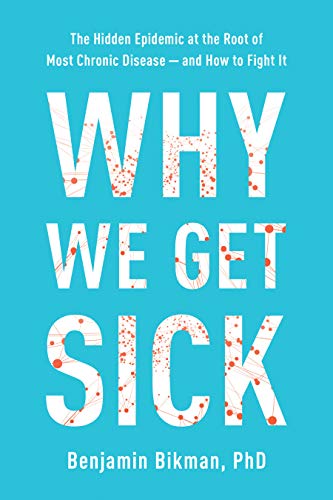
We are sick. Around the world, we struggle with diseases that were once considered rare. Cancer, heart disease, Alzheimer’s disease, and diabetes affect millions each year; many people are also struggling with hypertension, weight gain, fatty liver, dementia, low testosterone, menstrual irregularities and infertility, and more. We treat the symptoms, not realizing that all of these diseases and disorders have something in common. Each of them is caused or made worse by a condition known as insulin resistance. And you might have it. Odds are you do—over half of all adults in the United States are insulin resistant, with most other countries either worse or not far behind. In Why We Get Sick, internationally renowned scientist and pathophysiology professor Benjamin Bikman explores why insulin resistance has become so prevalent and why it matters. Unless we recognize it and take steps to reverse the trend, major chronic diseases will be even more widespread. But reversing insulin resistance is possible, and Bikman offers an evidence-based plan to stop and prevent it, with helpful food lists, meal suggestions, easy exercise principles, and more. Full of surprising research and practical advice, Why We Get Sick will help you to take control of your health.
I’ve posted this book before, it’s super impactful and makes a great demonstration of why hyperinsulinemia is so bad. It’s written in a very easy to understand and compelling way. I can not recommend this book enough. I’ve given out nearly a dozen copies of it to friends suffering from metabolic problems.
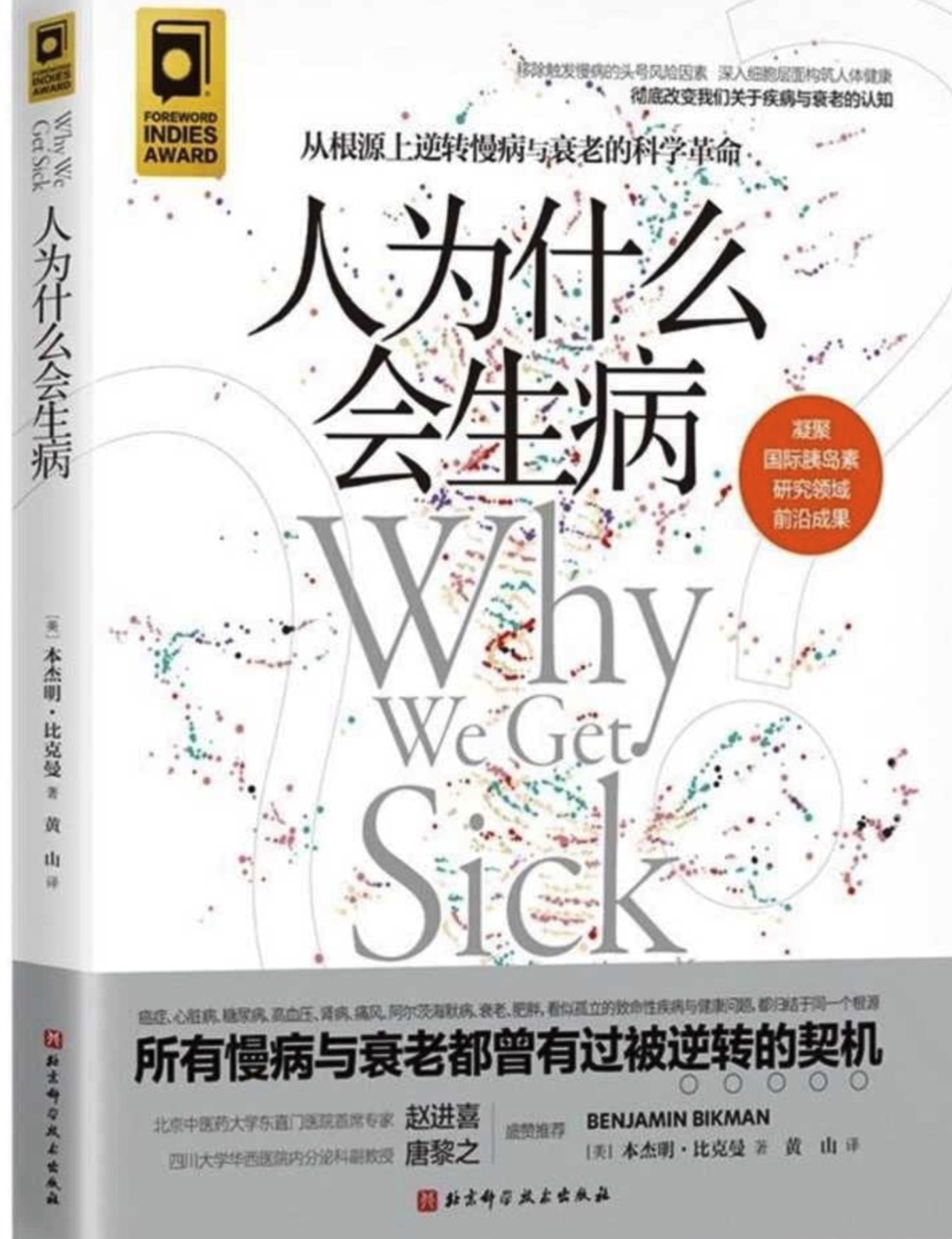
I just discovered, today, that a official chinese version is now available! If you have relatives, friends, who arn’t so great at English (especially such they wont try to read a book)… this is a great gift. Especially the auntie who smiles kindly at you, but never stops chain smoking and pops metformin like candy.
Exercise matters at least as much as diet and in my experience it was easier to change my amount of exercise. Getting 150 minutes of zone 2 a week fixed every single item in my bloodwork.
That is awesome!
There are many pillars to health, metabolism is a huge lever, but many people can be healthy without focusing on it explicitly.
deleted by creator
I strongly disagree, but I won’t ask you for any sources as you have said: you don’t read your sources, and you don’t care about your sources. Your opinions are facts, so there isn’t much point in digging in to why you believe what you believe.
deleted by creator
(You seem to know the reaction when posting bullshit 😆)
I don’t think my posts are bullshit, and I’m willing to dig into the details and tradeoffs with anyone as long as we don’t get into a slapfight. I’ve had several interactions with fabidden where they have literally said they don’t read the sources they provide, and they don’t care what their source say.
I wasn’t answering to you so …
Can you address what Professor Bikman says in this book, that it’s about metabolism? Maybe you could give it a read.
deleted by creator
Keto is not good for longevity and all blue zone populations eat lots of starches…
The book is about hyperinsulinemia, it doesn’t prescribe a solution, it does identify carbohydrate restriction and ketogenic metabolism as power tools to resolve insulin issues, but if your bias doesn’t align with that you have other options.
There are many ways to be healthy, including many lifestyles coupled with different eating patterns - being aware of insulin issues is important in a world plagued by metabolic problems.
You may be interested in learning more about the Blue Zones: https://discuss.online/post/36407199
The video and comments are very compelling but where did she get this information? Almost all websites like healthline say okinawans, 7th day adventists etc ate mostly plants.
I’ll just add looking at post-wwiI (4 years after the war) diets and saying that is the typical diet isn’t reasonable. Okinawa got pummeled; it’s estimated they had 100,000 pigs pre-war and less then 800 after, not to mention all their fishing boats were destroyed in the war. Hawaii famously resupplied pigs to the island to help them rebuild their nutrition.
Some very bad napkin math: 100,000 pigs in production cycle gives about 20 Mkg of pork per year yield sustainably; pre wwii population 500,000; one pig for every 5 people, or 40kg of pork product per person per year… that suggests these people enjoyed some animal products.
Plus, even if you buy into blue zones - you have to look at the tuple of (eating pattern, lifestyle, physical activity, community). If you want the benefits you have to do all of them, you can’t just cherry pick one thing (one food from the diet) and apply it and expect to get the same results.
A nuance that often get’s overlooked - If your saying the Okinawans got most of their energy from potatoes. HCLF - Fine, that also implies they didn’t get much fat. We know the Randel cycle (not a cycle) triggers when there is an abundance of carbs and fat in the blood stream - directly related to insulin insensitivity and inflammation, which they avoided by their low fat diet. So cherry picking starches are healthy, and applying that to a different eating pattern HCHF - high carb high fat, or fat with every meal… Mixing potatoes and vegetable oil (which the Okinawans did not have a just after wwii) WILL trigger the Randel cycle because the diet is different enough… Thats more insulin insensitivity and inflammation directly caused by mixing and matching different dietary contexts assuming they are strict benefits.
Belinda’s husband, Dr. Gary Fettke, was targeted by the processed food industry for his public opinion on the perils of excessive sugar consumption and for showing the potential to put patients with Type 2 diabetes into remission. This caused him to him to be ‘silenced’ by the Australian Health Practitioner Regulation Agency.
To clear Gary’s name Belinda did a lot of work looking into the organizations linked to the accusations that led to the silencing. Belinda’s information withstood Australian legal process, and the story has a happy ending; 2018 saw a clearance of those charges with a full apology from the Medical Board.
Here is an interview with Dr. Fettke, with him talking about his story: https://www.youtube.com/watch?v=r5gTtQVfcos It’s more concise than Dr. Zoe Harcombe’s interview with Dr Fettke.
If you’re curious about this particular rabbit hole, it’s well worth a listen.
wait… so the original Sardinia blue zone… are shepherds who keep pigs and cook in lard from the pigs… so (pigs, sheep, massive physical activity up and down a mountain every day)
Dan Buettner, the person who made up the Blue Zones, is a storyteller by trade. He has no other credentials. He told a compelling story, but unfortunately that story was not grounded in reality.
Only problem is that the world can’t handle to provide the meat if everybody is on a keto diet.
The focus here is improving people’s health and metabolism, a sick person is VERY expensive in terms of both money and environmental impact. We have 800 million type 2 diabetics globally (low estimate), treating their disease and complications has HUGE impact on the environment.
However, I don’t agree with the premise. People’s protein requirements don’t change if they go from omnivore -> ketogenic. The amount of meat they need to eat is the same.
Also, it is possible to do plant based ketogenic metabolism as well, if that is more your philosophy.
Update - Also the book isn’t about KETO itself, though that is a useful tool, it’s about identifying and fixing insulin sensitivity in people, which can be done on many eating patterns (though keto is the most effective)… i.e. there are many ways to be healthy, but 93% of adults don’t have optimal metabolic health which means they have some level of elevated insulin that needs to be addressed.
The amount of meat they need to eat is the same.
How do they get their calories if they don’t eat carbs? There is only fat and proteins. If proteins are kept low, what can people eat that is not pure fat?
How do they get their calories if they don’t eat carbs? There is only fat and proteins. If proteins are kept low, what can people eat that is not pure fat?
Yup, you got it, ketogenic eating patterns are low carb HIGH FAT
Can you give me some examples, please?
Examples of a well formulated ketogenic diet?
Keto for omnivores: https://www.dietdoctor.com/low-carb/keto#foods-to-eat
Keto for vegetarians: https://www.dietdoctor.com/low-carb/keto/vegetarian
full day by day meal plan with photos
Keto recipe index: https://www.dietdoctor.com/low-carb/keto/recipes
Basically you can build any meal you like, just keep your daily g carbs < 20 (for keto), <150 (for low carb)
When I started I liked fatty salmon, plus olives, and some brie as a dessert. I made a lot of scrambled eggs + bacon. Steak and eggs. Avocado drips, and pork rinds (it tastes better then it sounds).
Eco-Atkins is entirely plant based and contains fewer carbs than most vegan plans. However, it isn’t considered keto because it includes grains and provides over 50 grams of net carbs per day.
I think that plant based keto is not possible unless people drink oil. The moment animal products are used the feeding requires ten times the resources to create the same amount of calories. Calves are born to produce milk. Vegetarians are not much better for the world than carnivores.
Then using plant based oils comes with their own risks because the cheap ones are not healthy. Unfortunately the world can’t live off almonds either because there is not enough water.
So I am wondering if there is a vegan option or if poor people are forced to get sick.
So I am wondering if there is a vegan option or if poor people are forced to get sick.
I don’t think there is a vegan option for a ketogenic metabolism. You can do lower carb vegan if you like. https://www.dietdoctor.com/low-carb/vegan
if poor people are forced to get sick.
Your right, 80% of the worlds vegetarians are economic vegetarians - It’s a critical humanitarian issue to increase the supply of animal based foods available to them (i.e. one egg a day can have a huge impact on developing children).
The moment animal products are used the feeding requires ten times the resources to create the same amount of calories.
Calories yes, but humans don’t run on calories, we run on nutrition. a nutritionally complete WFPB is about 2.3kg-3kg of food per day, but the same complete nutrition on animal sources is 350g per day. If your just looking at kg/output per unit land pbf wins, but that is far less effective then abf. Not to mention 70% of the worlds agricultural land is pastoral and only suitable for ruminants anyway (can’t grow crops there)
Healthy fat! No industrially refined oils.
There is a growing body of evidence that we evolved to be lipovores.
That is a bonus - fat sources that existed in abundance > 150 years ago.
But as MD Westman says - the impact of ketogenic metabolism is immediate and profound, while optimizing fat sources is subtle and takes years to really see a benefit.
When people are just starting keto, I think any fat source is good enough, harm reduction. Keeping it simple until they are ready for more progress.
dietdoctor's spin on this
https://www.dietdoctor.com/low-carb/keto/fats-sauces#oils
What about vegetable, nut and seed oils? This is a bit more complicated. Natural oils that have been around for thousands of years are generally safe and should be embraced on a keto diet.
Feel free to use pure olive oil, ghee, avocado oil, almond oil, peanut oil, sesame oil, fish oil — anything for which it is easy to extract the oil with simple pressing, grinding, churning or low heat separating.
We do recommend minimizing the use of industrial seed or vegetable oils created within the past 60 years, such as corn oil, soy oil, safflower oil, sunflower oil, and cottonseed oil. These oils are created by chemical extraction and high heat industrial processes. Since there’s controversy about what kind of effects these seed oils might have on health, we feel that sticking with traditional, less processed fats makes sense.