

1·
2 days agoI’d say Caddy is generally easier and a more modern alternative to Apache/nginx.
I’d say Caddy is generally easier and a more modern alternative to Apache/nginx.

I guess it’s only what the article says - relevant for some space manoeuvres or precise measurements, and a curiosity otherwise.
In the long run days are getting longer anyway, as angular momentum keeps being transferred from earth to moon, which is slowly getting farther away. See Wikipedia Day - Variations in length and Moon - System evolution.
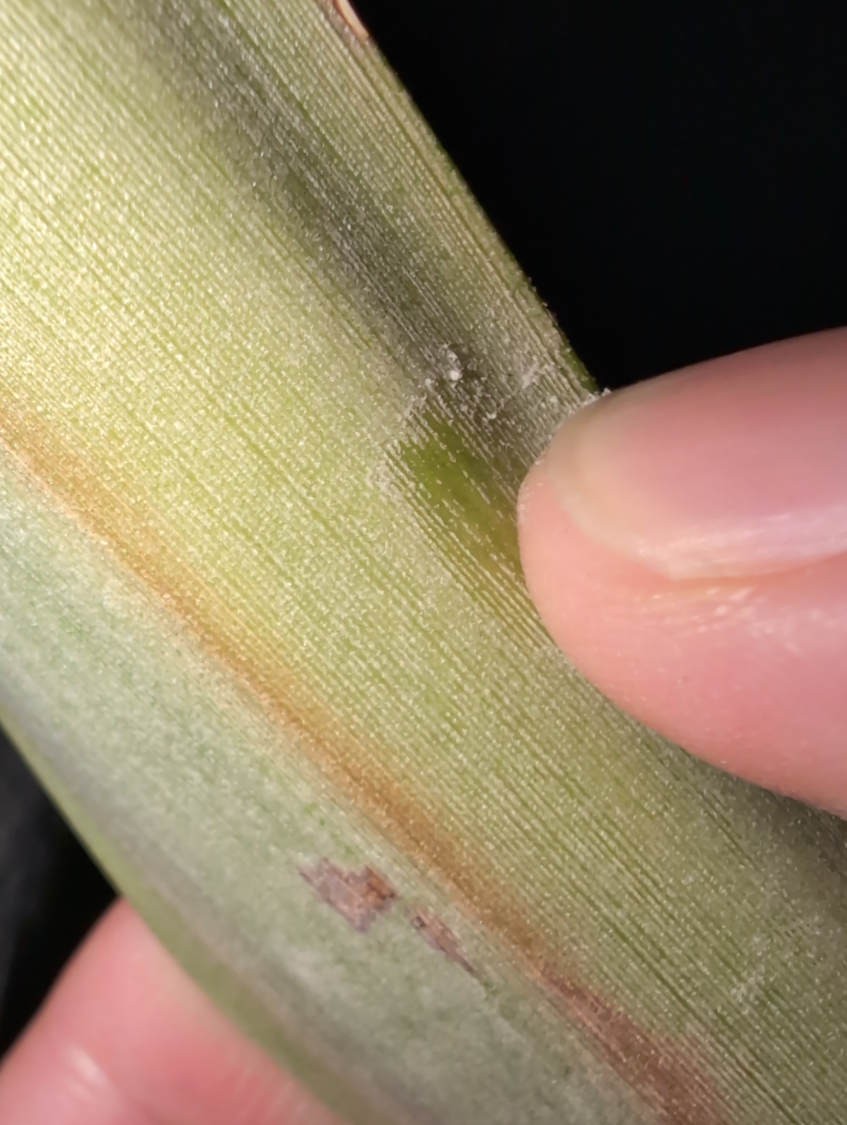
You may be right that I don’t use enough fertilizer, I usually do a bit in summer but I haven’t used any during the last 8 months. And I don’t know what the brown stripes on the leaves are about, but it doesn’t seem to stop the growth.
But I know that the leaves also produce some white waxy substance on the underside, which is probably what you’re seeing. It can be rubbed off. (Or at least I hope this is what I just rubbed off, lol.) The Pineapple manual (PDF) says it is to protect from moisture loss.
I don’t keep track, but I’d say about 3 years from store-bought pineapple (fruit with crown, cut off the bottom leaves) to flower.
I have harvested several already. I don’t know what I’m doing right, but I consistently get a flower and a fruit. I think it’s the warm and sunny location.
Anyway, here is what I do: Water every 2 weeks (pineapples are specialized to survive dryness and store water in their leaves, so not too much I guess). The tap water is a bit hard here, and I read you should filter it so I always do, but never tested without. Standard soil, a few stones as drainage in the bottom (I doubt this matters a lot). Do not put the plant on the balcony on a sunny summer day, when I did it wilted within 2 days and didn’t recover. I guess it really hates cool nights. The pot size has a big influence, the size in the photo seems to be optimal, with a smaller pot I get smaller leaves and a smaller fruit (600g instead of 1100g).
And before you take my advice, I should mention that many plants have wilted in my care at that window. Just not pineapples.
This is in Switzerland, near Zurich. Yes, sunny apartment. There is direct light from sunrise (left horizon on the photo) until 3pm or so (buildings block it on the other side).
In the BBS days before the internet really, my dad told me not to use my full name online. So I used martinxyz. This was getting old soon, so I contracted it to maxy. Some people now call me Max online, which I find kind of funny. I’m no longer trying to hide the link to my full name, I just don’t actively mention it because it really doesn’t matter. And when I want to cut the link I use pwgen.
Thanks for the follow-up. Of course you would have some kind of mass-deployment, it didn’t think of that. I thought you’d maybe copy the Windows MAC to Linux, but… then you’d remember doing that.
Next up, they will also all have the same ssh host key ;-) (Which may be an advantage actually, but still confusing.) Those are the kind of problems cloud-init is solving, I guess.
Sounds like a networking exercise on its own.
Do the attempted pings show up on the wire? (Switch LEDs, network card activity light.)
Does broadcast work? (Watch if it is received with tcpdump -n on both Linux VMs, and Wireshark on the Windows hosts, while doing ping -b 10.0.0.255. Or trigger a broadcast ARP by ping-ing a non-existing IP in the same network. Those should go through all bridge and switch devices, independent of IPs and routing setup.)
I think you need four distinct MAC addresses for this setup, are they all different?
The network card/driver is filtering received unicast by MAC. I’m sure something should set up the filters correctly, but maybe it went wrong, or there is a bug in the driver. Wireshark on Windows should be able to enable promiscuous mode, which disables the filter.
Side note: I don’t think you need a crossover cable. Auto-crossover should just work these days.
At work I map a USB Ethernet device into my Linux VM when I do anything networking, exactly to avoid those kind of “is it Windows?” questions. Also, I can then check the Ethernet link at the lowest level using Linux tools like ip link or mii-tool or ethtool.
I’m using VMWare for this, which I cannot recommend any more. (It used to be good for this, but gut much worse in recent years.) I think vanilla VirtualBox doesn’t allow to map USB devices.

Having used both Jitsi and LiveKit, I get it. Jitsi is great if you use it as it is, but if you want to integrate video conferencing into your own solution and customize everything, LiveKit is the logical choice. (I think it is also much newer then Jitsi, which used to be the only choice.)
If they wanted to integrate a finished product, I would expect them to use Matrix over Jitsi, because it seems to have seen some use in France already.
Also, I think Matrix integrated LiveKit for video over their existing Jitsi integration, so… the ecosystem seems to flock around LiveKit anyway. So maybe the’ll contribute to LiveKit if they find issues with it, and everyone benefits from that.
Blender user here. I think you got it right, and FreeCAD is probably your best bet. Maybe give it a second chance.
OpenSCAD is in a different category, it’s more like a coding tool or software library. There are other options if you’re into that, e.g. build123d.
I can’t use FreeCAD myself, but then I don’t have a mechanical engineering background, so I was also learning the basic CAD workflow when I tried it. At work my colleagues (who occasionally 3D print some part) seem happy with it, and keep telling me I should use a proper CAD to design parts.
Personally I’m happy with Blender, using it for my hobby 3D print designs. Most have some playful/artistic touch in addition to being functional, and Blender shines at that. But you totally can do a parametric design in Blender natively, it just won’t be a CAD workflow with the constraint solver you expect. The CAD plugins I have tried felt experimental. The native tools are very solid, and Blender is very polished and mature. But it is targeting expert users (including teams, since you asked about that). Learning Blender is an investment, it took me a long time. If you are still curious, look for a video demo/tutorial of someone designing a 3D part in Blender. Don’t just open it and expect to be able to do stuff, you will not figure out on your own which tools/modifiers you should use.
(And since you didn’t say what kind of CAD, also check out KiCad if you are doing PCBs!)
Well the problem is trying to attach the concept of “done” to a bitstream. You can release it, but then the release is “done”, not the software. You can evaluate software only in a specific cultural context, where it can be useful or not. Software is more similar to a law than to a fabricated pencil. Laws are updated and re-interpreted as the culture around them evolves, and they are “done” when the culture is done.
I like this quote:
The more we see creative software engineering as monotonous ticket crunching instead of learning and experimentation, the more we compare producing software to building houses. With that analogy, you can only go wrong. (Niko Heikkilä)
In other words, a factory product is “done” when it passes QA. You can try to apply the same productivity mentality to software (or to laws) but it just doesn’t make sense, because those are instructions how to do things, and not products to be consumed. It’s not a factory product, it’s a living cultural process.
Easy: Most software is done when nobody uses it any more.
If the code you wrote 10 years ago still isn’t quite done yet, you should celebrate. If someone still cares enough to consider it broken, or can think of improvements, it means that it is useful. In contrast to: finished and done with.
I see where this comes from, but it’s funny because F-Droid is the very last place where I expect this to happen. Right after hell freezes over. Imagine them listing their own app with an anti-feature from their list: https://f-droid.org/docs/Anti-Features/
Yes. I’m here for the long tail, the niche communities. And what do I see? Not enough photos of houseplants! Come on, you must have some too. And to add to the list, !books@lemmy.world looks nice.

I like Pl@ntNet. Except for the time it told me “Not a plant. Maybe fungi?” Technically correct, but…
The only thing I noticed is that the size of the pot has a huge effect on its growth.
Apart from that, I have no idea what I’m doing right. It may be the sunny, south-facing window. I have harvested several pineapple fruits over the years. They seem to be absolutely unstoppable and unkillable and predictable in their growth here. They don’t care about seasons (it’s snowing!). The only time I managed to kill one is when I put the pot outside in summer - it went bad in just three days.
Older photos: https://log2.ch/gal/ananas/

I’m still proud of my rendering of the logistic map. It was mostly just to learn more Rust, but it rendered this beatuiful picture with relatively little code. And mostly by accident, I didn’t know I would get those cool shadows!


I’d start with some basic Linux networking and tools, if you don’t have them already.
I don’t know if that’s the basics everyone knows these days, but… learn how TCP,UDP,ICMP,TLS relate, what a netmask is, what is ARP and MAC addresses. Fire up Wireshark and look around what is happening on your network. Learn some basic commands like
ip -br -aandss(or the oldernetstat) so you know how to figure out which program is listening where. Learn how to manually resolve a DNS name (digorhost). How tunnel a TCP connection or a webbrowser through ssh (port forwarding, SOCKS proxy). Learn enough of the HTTP protocol so you can manually enter a valid GET request over a simple TCP connection to port 80 withnetcatornc. Or usehttpieorcurlfor the same purpose. You can’t host a lot with that knowledge, but it helps to figure out why things are not working.